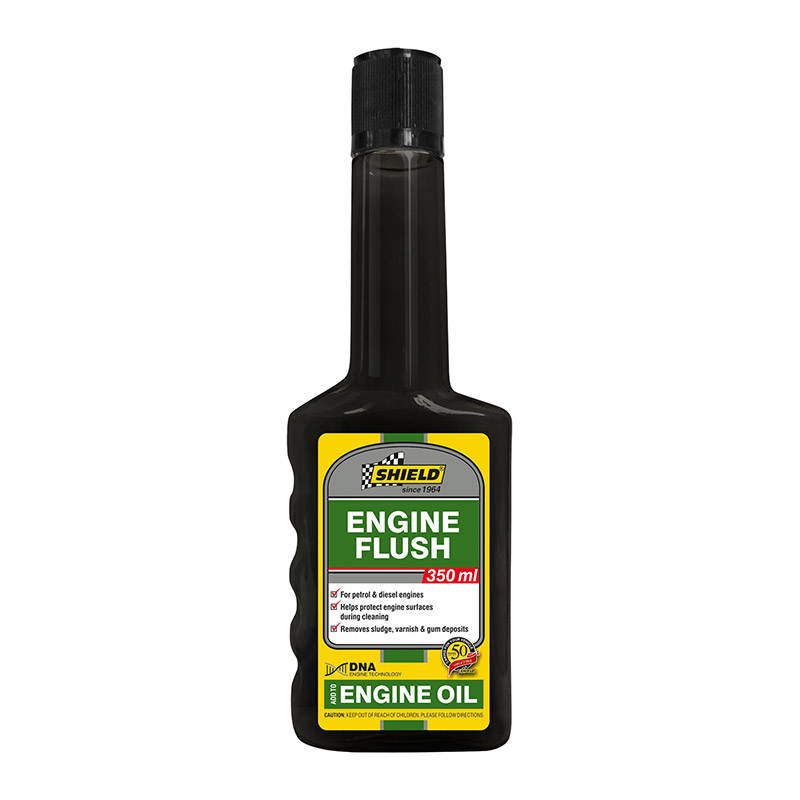

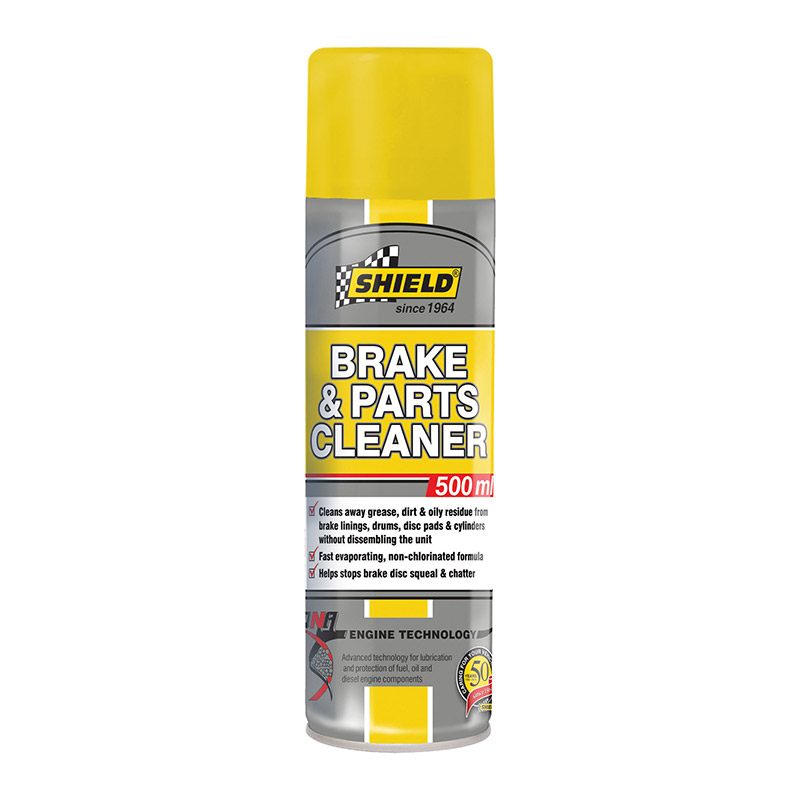
Shield Engine Flush is a high-potency chemical interface engineered for the internal decontamination of internal combustion engines during the lubricant replacement cycle. Formulated as a concentrated solvent and detergent matrix, this product is designed to dissolve and suspend accumulated carbon deposits, sludge, and varnish that adhere to critical metallurgical surfaces. The 350ml dosage is specifically calibrated to integrate with the existing engine oil, facilitating a comprehensive thermal and chemical cleansing of the oil galleries, piston rings, and hydraulic lifters prior to the introduction of fresh lubricant.
Chemical Engineering and Decontamination Dynamics
The Shield formula utilizes a specialized blend of high-activity surfactants and hydrocarbon-based dispersants. Upon introduction into the crankcase, the chemistry executes a multi-stage cleansing process:
- Carbon and Sludge Dissolution: The concentrated solvents penetrate hardened carbon crusts and viscous sludge "pockets." By breaking the molecular bonds of these contaminants, the flush converts solid-phase pollutants into a liquid-phase suspension within the oil.
- Varnish and Lacquer Removal: The chemistry targets the thin-film polymers and lacquers that form on high-heat components such as piston ring grooves and valve stems. Removing these deposits restores the mechanical "seal" of the piston rings and ensures the free movement of hydraulic components.
- Particulate Suspension: Advanced dispersants prevent the re-deposition of loosened particles during the flushing cycle. This ensures that all contaminants are held in suspension until the oil is drained, preventing the localized blockages that can occur with inferior formulations.
Structural Integrity and System Compatibility
To ensure the operational safety of high-precision automotive and industrial engines, Shield Engine Flush is engineered for wide-spectrum material compatibility:
- Seal and Gasket Preservation: The formula is pH-neutral toward synthetic and natural elastomers. This ensures that the flush does not induce "swelling" or "brittleness" in internal oil seals, front and rear main seals, or valve stem seals.
- Metallurgical Neutrality: The chemistry is verified to be non-corrosive toward all standard engine alloys, including aluminum, cast iron, and yellow metals (brass/bronze) found in bushings and thrust washers.
- Lubricity Retention: While highly detergent, the formula is engineered to maintain a critical boundary lubrication layer during the idling-only cleaning cycle. This prevents metal-to-metal contact on bearing surfaces while the oil viscosity is temporarily reduced by the solvent carrier.
Industrial and Professional Applications
This internal cleansing interface is a foundational tool for automotive technicians, fleet maintenance engineers, and high-mileage vehicle owners. It is the industry standard for:
- Preventative Maintenance Cycles: Ensuring the total removal of degraded oil and contaminants to maximize the service life and performance of new synthetic or mineral lubricants.
- Restorative Engine Service: Clearing the oil-starved hydraulic lifters and "stuck" piston rings that contribute to engine noise, increased emissions, and oil consumption.
- Fleet Infrastructure Longevity: Maintaining the thermal efficiency and operational reliability of heavy-duty and commercial vehicles subjected to prolonged idling and frequent stop-start duty cycles.
Technical Summary and Durability
Shield Engine Flush 350ml is a foundational component for high-efficiency mechanical management and thermal infrastructure preservation. Its combination of metallurgical-grade chemical solvency and precision detergent engineering provides a dependable, low-maintenance solution for high-value engine assets. The non-corrosive, heat-stabilized formula ensures that the internal oil passages remain dimensionally stable and mechanically sound over extensive operational cycles. Designed for professional-grade reliability, this flush ensures a permanent and stable mechanical interface for modern automotive and industrial transport.