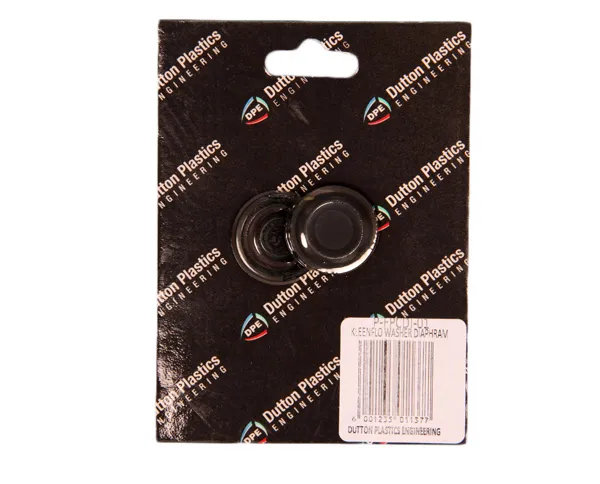


Kleenflo Diaphragm Washers (2-Pack) are essential replacement components for high-pressure ball valves used in toilet cisterns and water storage tanks. These flexible rubber diaphragms are the "moving heart" of the inlet valve, responsible for cutting off the water flow once the float reaches its set level.
Technical Specifications
- Material: High-grade reinforced Nitrile Rubber (NBR).
- Diameter: 32mm (Standard for most South African side-entry and bottom-entry ball valves).
- Configuration: Flat disc with a center "pip" or locating lug.
- Compatibility: Fits standard Kleenflo, Dutton, and most generic brass or plastic ball valves.
- Pack Quantity: 2 Units (Ideal for keeping a spare in the Kaufmann tool chest).
Key Performance Features
- Precision Shut-Off: Designed to provide an instantaneous, drip-free seal against the valve nozzle. This prevents "phantom flushing" and saves thousands of liters of water per year.
- Pressure Resilience: Engineered to handle the high-pressure outputs of municipal lines and Pascali Pressure Pumps (up to 600 kPa) without deforming.
- Chemical Resistance: The nitrile compound is resistant to the chlorine and mineral-heavy water of the Heidelberg - GP region, preventing the rubber from becoming "gummy" or brittle.
- Quiet Operation: The flexible nature of the Kleenflo rubber helps dampen "water hammer" and whistling noises during the cistern refilling cycle.
- Cost-Effective Maintenance: Replacing just the diaphragm is a 5-minute DIY job that avoids the cost and labor of replacing the entire ball valve assembly during the Easter 2026 home maintenance window.
Installation & Professional Tips
- Isolation First: Close the Pro-Close Stop Tap or isolation valve leading to the cistern before opening the ball valve housing.
- Housing Access: Unscrew the large plastic or brass nut at the head of the inlet valve. You do not usually need a Kaufmann shifting spanner for plastic valves; hand-pressure is often sufficient.
- Orientation: Take note of which way the old washer is facing. The "smooth" side of the Kleenflo diaphragm must face the water inlet nozzle to create a proper seal.
- Cleaning the Seat: Before inserting the new washer, use a Shield Microfibre Cloth to wipe the inlet nozzle. Even a tiny grain of sand can prevent the new diaphragm from sealing, leading to a constant trickle into the Wirquin overflow.
- Pin Check: Ensure the small plastic "actuator pin" is centered on the diaphragm before screwing the housing back together. If the pin is misaligned, the float arm won't be able to push the washer closed.
Common Use Cases
- Toilet Repairs: Fixing cisterns that won't stop running or take too long to refill.
- Header Tanks: Maintaining the inlet valves on attic water tanks or livestock troughs.
- Preventative Maintenance: Replacing worn washers before the Winter Bulk 2026 freezing temperatures cause old, brittle rubber to fail.
Pro Tip: If your toilet makes a high-pitched "whistling" sound when it finishes filling, it is almost always a sign that the diaphragm washer has a tiny tear or has lost its elasticity. Since this is a 2-Pack, always store the second washer in a cool, dry place away from direct Gauteng sunlight to ensure the rubber stays fresh for future use.