
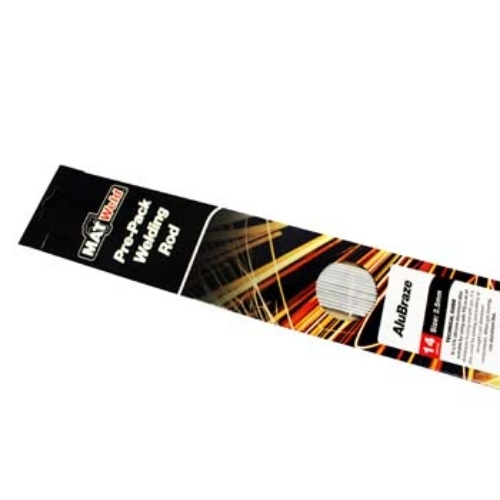

The Matweld M022 is a 1.6mm aluminum brazing filler rod designed for precision repair and joining of thin-walled aluminum components. These rods are ideal for tasks where using a larger diameter rod (like the 2.5mm or 3.2mm versions) would provide too much filler metal or risk burning through delicate base materials.
Technical Specifications
- Diameter: 1.6mm.
- Code: M022 (Pre-pack code: MAN0220).
- Classification: 5% Silicon Aluminum Alloy (ER4043 style).
- Melting Range: Approximately 570°C to 630°C.
- Pack Size: Typically sold in pre-packs of 20 rods.
Key Performance Features
- Precision for Thin Gauges: The 1.6mm diameter allows for meticulous control on thin aluminum sheets, fine tubing, and small casting repairs where a larger rod would be difficult to manage.
- High Fluidity: The 5% silicon content ensures excellent wetting action, allowing the molten alloy to flow smoothly into tight joints via capillary action.
- Reduced Distortion: Because these rods melt at a lower temperature than pure aluminum, you can achieve a strong bond with less heat, minimizing the risk of warping the surrounding metal.
- Reliable Sealing: Perfect for creating leak-proof joints in pressurized systems like refrigeration lines or fuel tanks.
Common Applications
- HVAC & Cooling: Brazing thin-walled copper-to-aluminum transitions or repairing aluminum air conditioning fins and condenser tubes.
- Automotive: Fine repairs on aluminum radiators, oil coolers, and intricate aluminum trim.
- Electronics: Fabrication of custom aluminum heat sinks or protective enclosures.
- Hobbyist & DIY: Ideal for model building, lightweight aluminum frame repairs, and small household aluminum fixes.
Usage & Professional Tips
- Aluminum Brazing Flux: You must use a dedicated aluminum brazing flux with the M022. The flux removes the tough oxide layer on the aluminum, which is the only way the filler metal can bond to the surface.
- Surgical Cleanliness: Use a stainless steel wire brush (one that has never touched steel) to clean the joint until it is bright. Any oil or oxidation left behind will cause the brazing rod to "ball up" rather than flow.
- Heat the Work, Not the Rod: Use a propane or MAPP gas torch to heat the aluminum parent metal. Once the metal is hot enough to melt the rod on contact, the filler will flow into the joint. Directing the flame at the 1.6mm rod will cause it to melt prematurely.
- Post-Brazing Clean: Always wash the joint with warm water and a brush after it has cooled. Brazing flux is corrosive and will eventually pit or damage the aluminum if left on the surface.
Related products


Out of stock
Hand & Power Tools and Accessories
R189.90 Incl